


Colour Measurement of Cosmetic Products: Precision for Creams, Lotions, Gels, Perfumes, and Oils
Colour creates brand recognition. In cosmetics, color shapes the first impression, conveys specific product characteristics, and plays a key role in brand identity. That’s why a cream must look exactly the same today as it did the last time it was used. A perfume must not suddenly appear darker, and a lotion should retain its defined shade regardless of batch or production location.
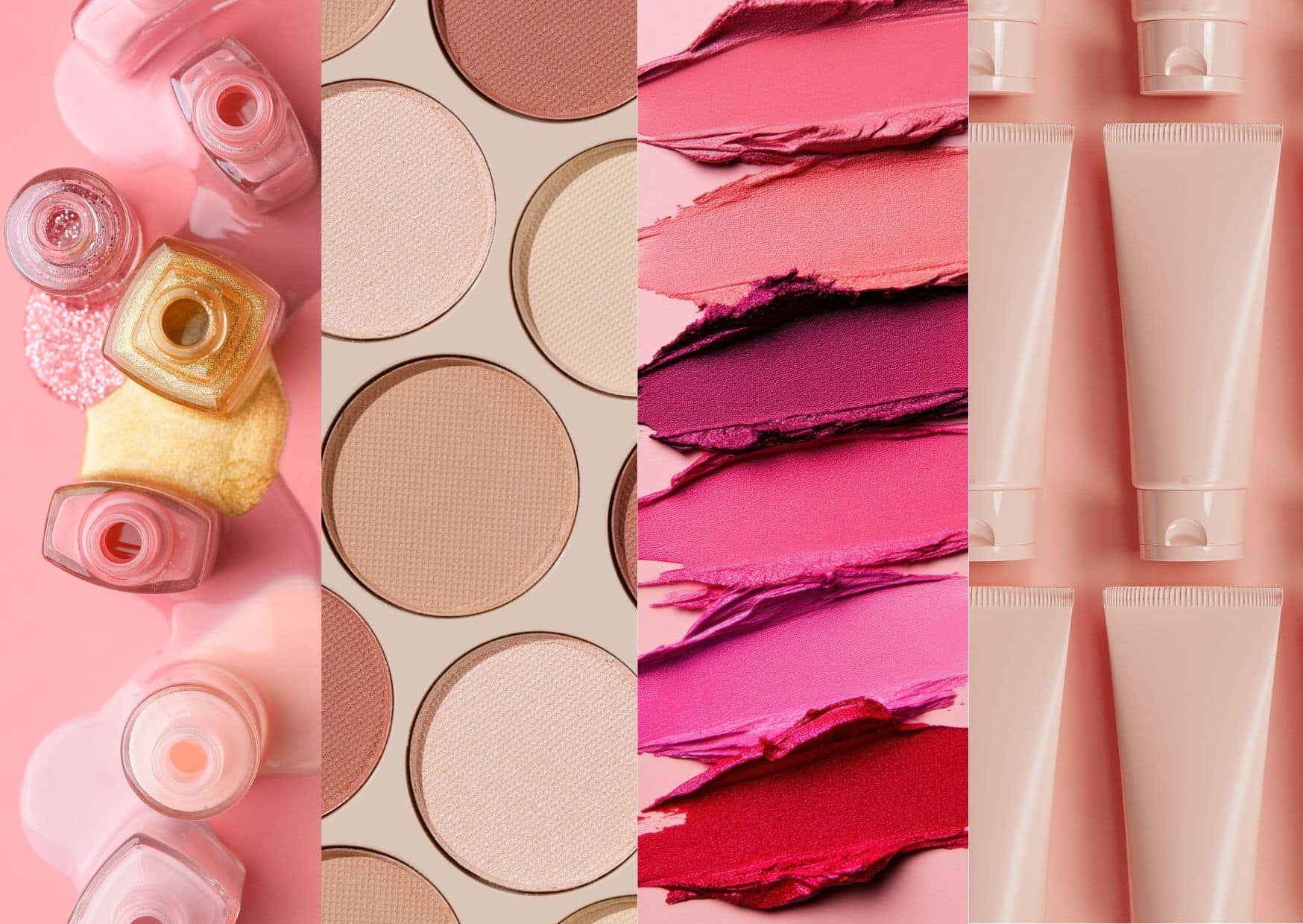
Lacquers, powders, eye shadow, makeup, pigments, and all kinds of packaging—colour plays a vital role in cosmetic products. Only those that appeal to the eye and offer a high level of quality can win over consumers.
What appears simple visually is technically challenging to measure. Cosmetic products vary significantly in consistency, transparency, surface texture, and gloss. Powders, creams, lotions, gels, oils, and perfumes therefore each require a measurement method suited to their specific consistency.
Instrumental colour measurement provides an objective basis for this. It translates visual color perceptions into reproducible measurement values and supports cosmetics manufacturers throughout the entire process—from product development and process control to final batch approval.
Colour is a sign of quality
Cosmetics appeal to the senses. Even before their scent, texture, or skincare benefits are evaluated, their colour conveys an impression of quality, effectiveness, and reliability.
Even minor discrepancies can raise questions:
- Has the recipe been changed?
- Are the raw materials used different?
- Has the product aged or oxidized?
- Were pigments, dyes, or other ingredients measured out evenly?
- Have the temperature, mixing time, or process conditions remained stable?
A deviation in color is not necessarily a quality defect. However, it can be an early indication of changes in raw materials, formulation, processing, or storage. Colour measurement helps to objectively identify such deviations and investigate them in a targeted manner.
Why visual assessment alone is not enough
The human eye can perceive even subtle differences in color. However, the assessment remains subjective. Lighting, the environment, fatigue, experience, and individual color vision all influence the result.
It is particularly difficult to compare products that are evaluated at different times, in different locations, or under varying lighting conditions. Furthermore, human color memory is not reliable enough to accurately reproduce a shade over an extended period of time.
Spectrophotometers, on the other hand, measure colour under defined conditions. A visual assessment yields quantitative colour data, such as CIE L*a*b* values and colour differences like ΔE. Manufacturers can store reference standards and tolerances and immediately compare new measurements with an approved reference sample.
This turns “it looks like a good fit” into a well-reasoned quality decision.
Different cosmetic products require different measurement methods
Cosmetics range from opaque powders and semi-solid formulations to nearly colorless, transparent liquids. Consequently, their interaction with light varies accordingly.
| Sample Type | Typical Products | Preferred Measurement | Appropriate Solution |
|---|---|---|---|
| Opaque to translucent, semi-solid or pasty | Creams, lotions, emulsions, opaque gels, pastes | Reflection Measurement | ColorFlex L2 |
| Liquid and opaque or more cloudy | Liquid lotions, shampoo, shower gel, pigmented liquids | Reflection Measurement | ColorFlex L2 |
| Transparent to slightly cloudy | Perfume, essential oils, transparent cosmetic oils, serums, and clear solutions | Transmission Measurement | Vista L2 |
| Solid or powdered | Powder, blush, eyeshadow, pressed products, soaps | Reflection Measurement | ColorFlex L2 |
| Packaging | Bottles, tubes, and jars | Reflectance or Transmission | Application-Specific Solution |
The product name alone is not the deciding factor. For example, a gel can be transparent, translucent, or opaque. The choice of measurement method therefore depends on the actual optical behavior of the sample.

ColorFlex L2 for powders, pigments, creams, lotions, and gels
The ColorFlex L2 is a compact color measurement station designed for measuring the reflectance of opaque and translucent samples. In the cosmetics industry, it is particularly well-suited for powders, creams, lotions, emulsions, and gels, where colour is primarily perceived through the light reflected by the sample.
The 45°/0° measurement geometry measures colour under non-gloss conditions and is based on the visual colour impression. With the appropriate sample containers and accessories, semi-solid and liquid products can be positioned reproducibly in front of the measurement aperture.
Typical applications include:
- Skin and Face Creams
- Moisturizing lotions and body lotions
- Sunscreen and Skincare Products
- Foundations and tinted moisturizers
- Cleansing Lotions
- opaque or more translucent gels
- Shampoo, shower gel, and hair care products
- semi-solid makeup and skincare formulations
- Powdered samples such as eye makeup or face powder
Reproducible Sample Preparation
When it comes to creams, lotions, and gels, it’s not just the measuring device that matters. The presentation of the samples must also be consistently standardized. Variations in fill levels, air bubbles, uneven surfaces, or residues on the sample container can affect the results.
Therefore, the same conditions should always be maintained for comparable measurements:
- identical sample containers and a specified fill level
- homogeneous, bubble-free sample
- smooth surface
- constant sample temperature
- Identical measurement aperture and instrument settings
- a specified number of individual measurements to calculate an average
- Cleaning the sample container between measurements
For translucent samples, it is also important to ensure that the layer thickness and background remain constant. Only then can measurement values from different batches be reliably compared with one another.
Evaluate Colour Data Directly
The ColorFlex L2’s built-in software displays colour data, spectral curves, and colour differences directly on the device. Product-specific standards and tolerances can be stored for quality control purposes. A pass/fail indicator immediately shows whether a sample falls within the specified limits.
The system can operate independently without an additional computer. Measurement data can also be transferred to existing LIMS, SPC, or other quality management systems. This simplifies the documentation and comparison of batches, production lines, and locations.
 Vista L2 for Perfumes, Oils, and Transparent Liquids

For perfumes, essential oils, transparent serums, and other clear cosmetics, transmission measurement is the appropriate method. This method measures how light passes through the sample and which spectral components are absorbed or scattered.
The Vista L2 measures transparent and translucent samples in transmission. Colour and turbidity can be determined in a single measurement. This is particularly valuable when it is necessary to monitor not only the actual colour but also any undesirable turbidity.
Typical applications include:
- Perfume and Eau de Parfum
- essential oils
- Transparent cosmetic oils
- Fragrance and Active Ingredient Concentrates
- clear serums
- alcoholic and aqueous solutions
- Transparent raw materials and dye solutions
Looking at Colour and Haze Together
When it comes to perfume, it’s not just the scent that matters. The visible colour must also match the product’s identity and packaging. For example, a darkening or change in colour can indicate fluctuations in raw materials, a different blend, or changes that occurred during storage.
Essential and cosmetic oils can also vary significantly in their natural color and cloudiness. Some oils are nearly colorless, while others have a characteristic yellow, golden, or darker hue. What matters, therefore, is not whether an oil is as light as possible, but whether it meets the defined standard.
Among other things, the Vista L2 tracks:
- CIE L*a*b* colour values
- spectral transmission data
- Colour differences such as ΔE
- APHA/PtCo/Hazen
- Gardner Color Number
- Haze and Other Turbidity Parameters
- Total Transmission and Regular Transmission
The large transmission shaft accommodates various cuvettes, vials, and glassware. For small sample volumes, appropriate holders are available for macro, semi-micro, and ultra-micro cuvettes. It is important to use the same container and the same optical layer thickness for all comparative measurements.
Colour measurement throughout the entire production process
A consistent product color is not achieved only during the final quality control check. It is the result of stable raw materials, defined formulas, and controlled production conditions.
Goods Received
Pigments, dyes, oils, waxes, and other raw materials can be objectively tested against approved standards. Deviations are detected before they affect production.
Research and Development
In product development, spectral colour data helps develop products in line with the colour specifications of the customer or the marketing department, or systematically adjust formulations. Samples can be evaluated not only visually but also based on defined colour values. This supports shorter development cycles and facilitates the transition from lab samples to mass production.
Process Control
During production, changes resulting from dosage, mixing ratios, temperature, processing time, or fluctuations in raw materials can be detected early on. Colour values serve as an additional indicator of process stability.
Batch Release
The finished product is compared to the stored standard. Defined tolerances provide a clear basis for approving, reworking, or rejecting a batch.
Stability and Storage Tests
Regular measurements document whether and how a product changes under specific storage conditions. With perfumes and oils, for example, yellowing, darkening, or increasing cloudiness can be monitored.
Benefits for Cosmetics Manufacturers
Systematic instrumental colour measurement helps manufacturers to
- To detect color variations early on,
- To compare batches objectively and reproducibly,
- to ensure brand consistency across products and locations,
- To reduce complaints, returns, and rework,
- to avoid waste and the unnecessary use of raw materials,
- To accelerate development and approval processes,
- Documenting measured values in a traceable manner and
- Integrate colour data into existing quality management systems.
Colour measurement does not replace regulatory or chemical-analytical testing of a cosmetic product. However, it supplements these tests by providing a fast, objective, and sensitive tool for monitoring visual appearance.
The right solution depends on the sample
Creams, lotions, gels, perfumes, and oils place different demands on measurement technology. For opaque and more translucent formulations, the ColorFlex L2 offers a compact solution for reflectance measurement. For transparent or slightly cloudy liquids, the Vista L2 enables the precise determination of colour and turbidity in transmission.
HunterLab helps cosmetics manufacturers select the appropriate measurement geometry, develop a reproducible measurement method, and define meaningful standards and tolerances. This makes colour a reliable quality attribute—from raw material testing to the finished product.
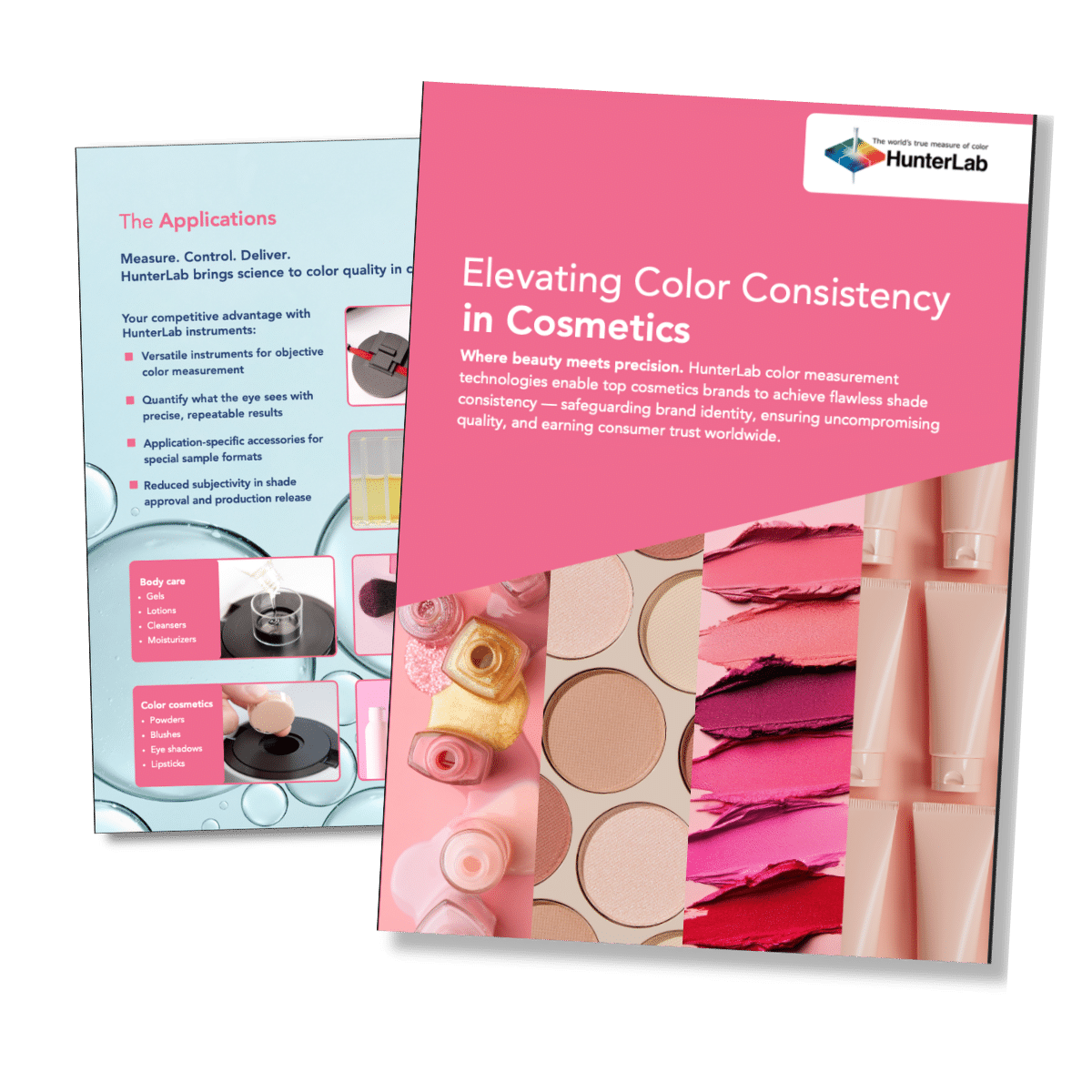
Industry PDF: “Colour Measurement of Cosmetic Products”:
For more information on typical applications, challenges, and suitable measuring instruments, please see our new industry brochure, “Colour Measurement of Cosmetic Products”:
Would you like to know which measurement method is right for your cream, lotion, gel, perfume, or oil? Our colorimetry experts will evaluate your application and recommend a suitable solution for reproducible quality control.
FAQ - Frequently Asked Questions About Colour Measurement of Cosmetic Products
Can creams, lotions, and gels be measured using a colour measurement device?
Yes. Opaque and more translucent creams, lotions, emulsions, and gels can be objectively measured using a reflectance colour measurement device such as the ColorFlex L2. To ensure reproducible results, sample containers (e.g., the Ring & Disc Set), fill level, surface, and temperature must be standardized.
Which colour measurement device is suitable for perfume and transparent oils?
The Vista L2 is suitable for transparent and slightly turbid liquids. It measures colour in transmission and can simultaneously determine turbidity or the haze value.
Can the ColorFlex L2 also measure transparent gels?
The ColorFlex L2 is particularly well-suited for opaque and more translucent gels that are measured using reflectance. For largely transparent gels, a transmission measurement using the Vista L2 may be the more appropriate method. The choice depends on the optical properties and the specific quality objective;our colorimetry experts will provide you with tailored advice for your application.
What colour values are used in cosmetic products?
CIE L*a*b* values and colour differences such as ΔE are frequently used. For transparent liquids, colour indices such as APHA/PtCo/Hazen or Gardner, as well as transmission and turbidity values, may also be relevant.
Why is standardized sample preparation important?
Variations in layer thickness, fill levels, air bubbles, surfaces, or sample containers can affect the measurement results. A standardized measurement method ensures that the products themselves—and not differences in how the samples are presented—are being compared.
Can measurement data be imported into existing quality management systems?
ColorFlex L2 and Vista L2 support the transfer of measurement data to LIMS, SPC, and other quality management systems. This allows results to be centrally documented, analyzed, and compared across different production sites.