


Inline color measurement in plastic granulate production: ensure quality, avoid rejects
In the plastics, chemical and recycling industries, color is much more than just an optical feature. It is a key quality indicator that allows conclusions to be drawn about material purity, process stability and batch consistency. In granulate production in particular, the smallest color deviations can have enormous economic consequences – especially if they are detected too late.
Inline color control = zero waste
A large plastics compounder and recycling specialist in Germany faced precisely this challenge:
From time to time, mismatched pellets contaminated a 30-ton product silo. This resulted in significant waste or costly and time-consuming reprocessing.
The reason was not a lack of quality control – on the contrary:
The company had an established, precise laboratory-based color measurement system. But valuable time passed between production and the measurement result. By the time color deviations were detected, the silo had already been filled.
The customer’s central question was therefore:
“Can the color of pellets be measured directly online – in the running process?”
The solution: Inline color measurement directly in the process
HunterLab developed the SpectraTrend HT for this application, which detects color deviations in real time – so that the defective product can be rejected before it reaches the storage area.
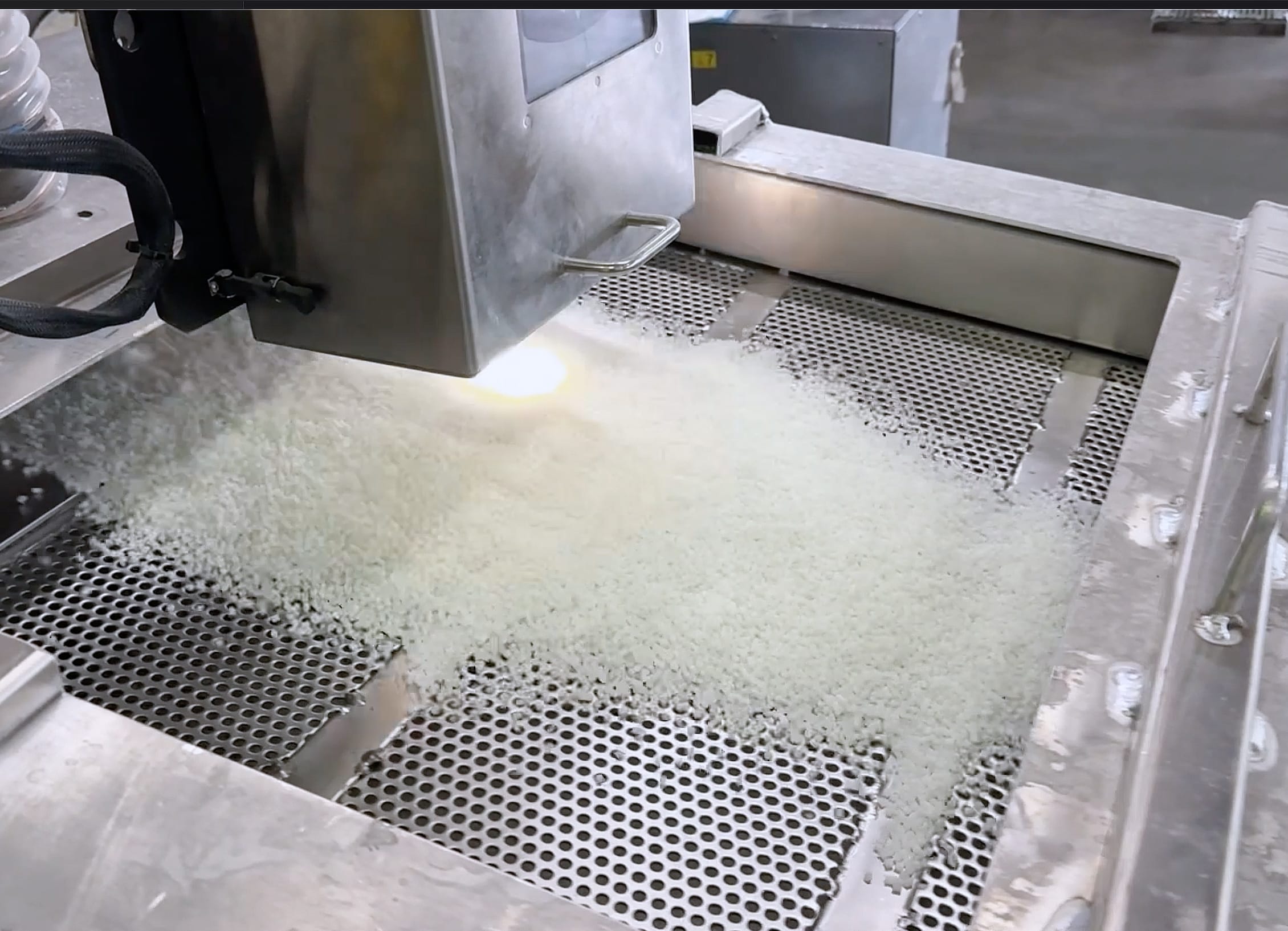
The SpectraTrend HT determines color values during production.
Installed system components:
-
STHT inline spectrophotometer
-
ColorWorkbench software for real-time analysis and visualization
-
IR thermometer for continuous recording of the product temperature
-
Digital relay output module for automatic ejection
-
Robust protective housing for use in demanding environmental conditions (dust, humidity) in production
As soon as the measured ΔE* value exceeds defined limit values, the system reacts immediately:
Deviating pellets are automatically discharged – before they reach the silo.
Measurement practice: Ensuring quality where it is created
Inline color measurement consistently shifts quality control from the laboratory to the process. While laboratory devices continue to be used for references and approvals, the inline system takes over continuous monitoring during operation.
This makes color an active control parameter in the production process – not just a downstream inspection criterion.
Concrete advantages for the user
The introduction of inline color measurement brought measurable benefits to the customer:
-
✅ Immediate response to FAIL conditions
-
✅ Virtually no waste and no reworking
-
✅ Elimination of time-consuming test chips and manual tests in the QA laboratory
-
✅ Automatic protection of downstream processes
Result: Fast ROI and high acceptance
The investment paid off faster than expected:
-
ROI after just 3 months thanks to reduced reject quantities and higher process efficiency
-
Significantly improved process reliability and production stability
Customer feedback was correspondingly positive:
“The system has paid for itself faster than expected.”
Shortly afterwards, the company decided to install a second system on another production line.

The SpectraTrend HT measurement data is evaluated and analyzed using the colorWorkbench software on an external PC (under protective film).
Conclusion: Inline color measurement as the key to process reliability
This application impressively demonstrates the contribution that inline color measurement can make to sustainable and economical plastics production:
- Quality assurance directly on the line
- GGuarantee of high product purity
- Faster ROI thanks to less waste and greater efficiency
HunterLab not only provides measurement technology, but also a decisive safeguard for quality, efficiency and competitiveness.
Frequently asked questions about the inline measurement of plastic pellets:
What is inline color measurement?
Why is inline color measurement important for plastic granules?
This allows color deviations to be detected at an early stage before large quantities are produced or fed into silos. This significantly reduces rejects and rework.
What is the difference between inline and laboratory color measurement?
Laboratory color measurement takes place randomly and with a time delay. Inline color measurement measures continuously in real time and enables immediate reaction and adjustment of process parameters.
Which color parameters are monitored inline?
Typically, ΔE* values as well as L*, a* and b* are continuously recorded and compared with defined target values. Tolerances define when to react to deviations must be reacted to.