


Color measurement of meat substitute products

Vegan is in! More and more consumers are now consuming plant-based meat substitutes. The decisive factors here are often their own health, animal welfare and climate protection. It is interesting to note that the better the taste, smell and appearance of a real piece of meat, the greater the acceptance of meat alternatives. The aim of manufacturers of substitute products is therefore to cover the entire sensory spectrum, i.e. to create a product that is as close as possible to the original animal product in terms of these three components.
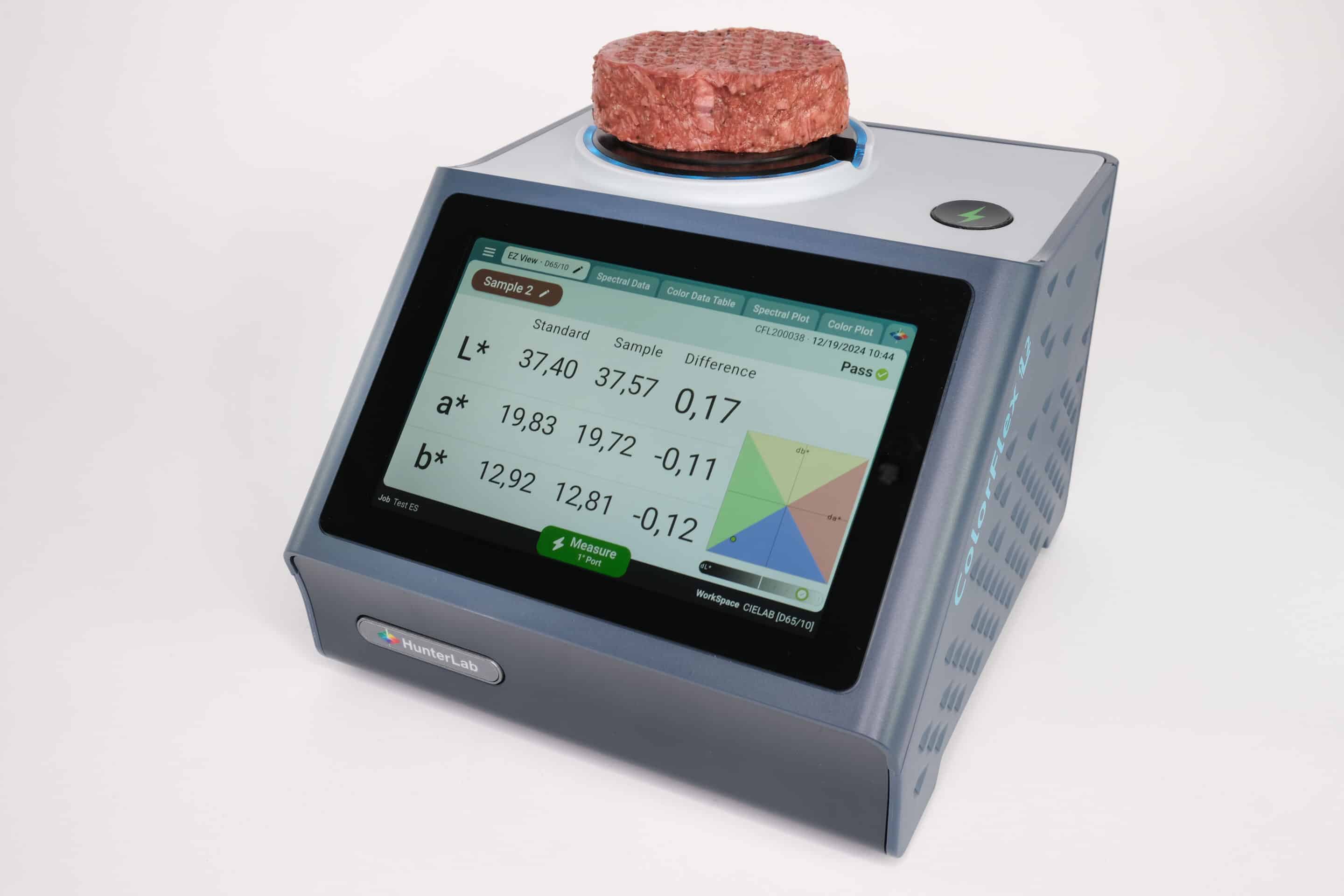
Color measurement of Burger-Pattie with the ColorFlex L2
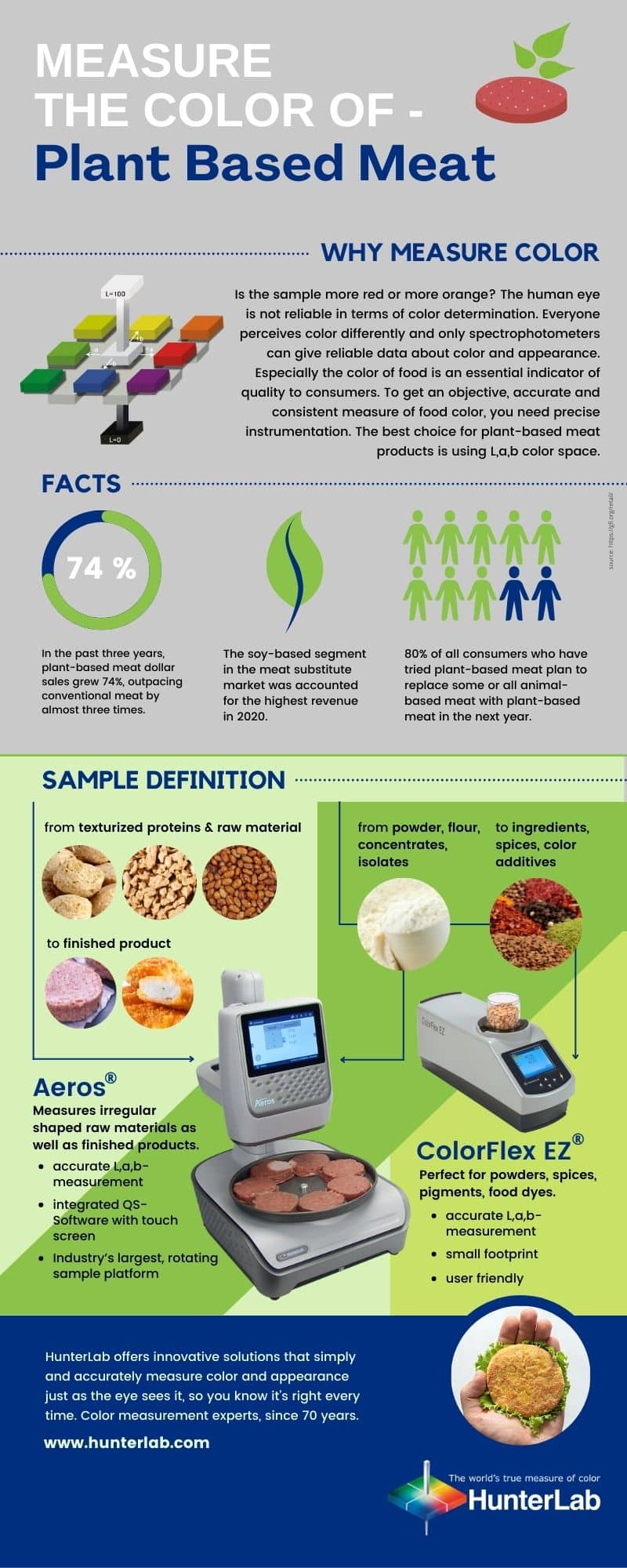
HunterLab Infographic Color Measurement of Plant-Based Meat
The characteristic taste we associate with meat most likely comes from animal hemoprotein and is not easily imitated by other ingredients and spices. This is where the color of the product comes into play: According to a study in the Journal of Consumer Research, the color and appearance of a food sometimes influence our taste impression even more than the actual taste. If a plant-based product looks like real meat, consumers are more likely to taste meat. When using plant-based proteins, it is therefore essential to optimize the visual impression as well as the taste.
 Color may appear to be a subjective quantity, but it can actually be measured. Color perception is based on how strongly a surface absorbs or reflects the wavelengths of light. With the help of spectrophotometers, manufacturers can therefore determine the color values of real meat in order to define uniform color formulations for plant-based products.
High-quality colorimeters are the basis for reproducing the characteristic appearance of meat. These can be used to check the quality of the raw materials and additives in a product, as well as to check and guarantee the visually consistent appearance of the end product.
Specifically, the Aeros from HunterLab, which can measure larger surfaces of inhomogeneous material in particular, would be suitable. Grainy raw materials such as seitan, soy, lupins and peas can be easily measured in the 30 cm diameter bowl. The cleaning effort is very low compared to conventional devices, as no glass cuvettes are used that would have to be cleaned afterwards.
If you want to measure the color of powdered ingredients such as wheat proteins, spices or pigment powders, HunterLab recommends measuring in a glass cuvette with the ColorFlex L2 or the Agera. These devices are also suitable for measuring opaque liquids such as food coloring solutions.
For end products, such as plant-based burger patties, both the laboratory color measurement devices mentioned above and inline spectrophotometers such as the SpectraTrend HT can be used.
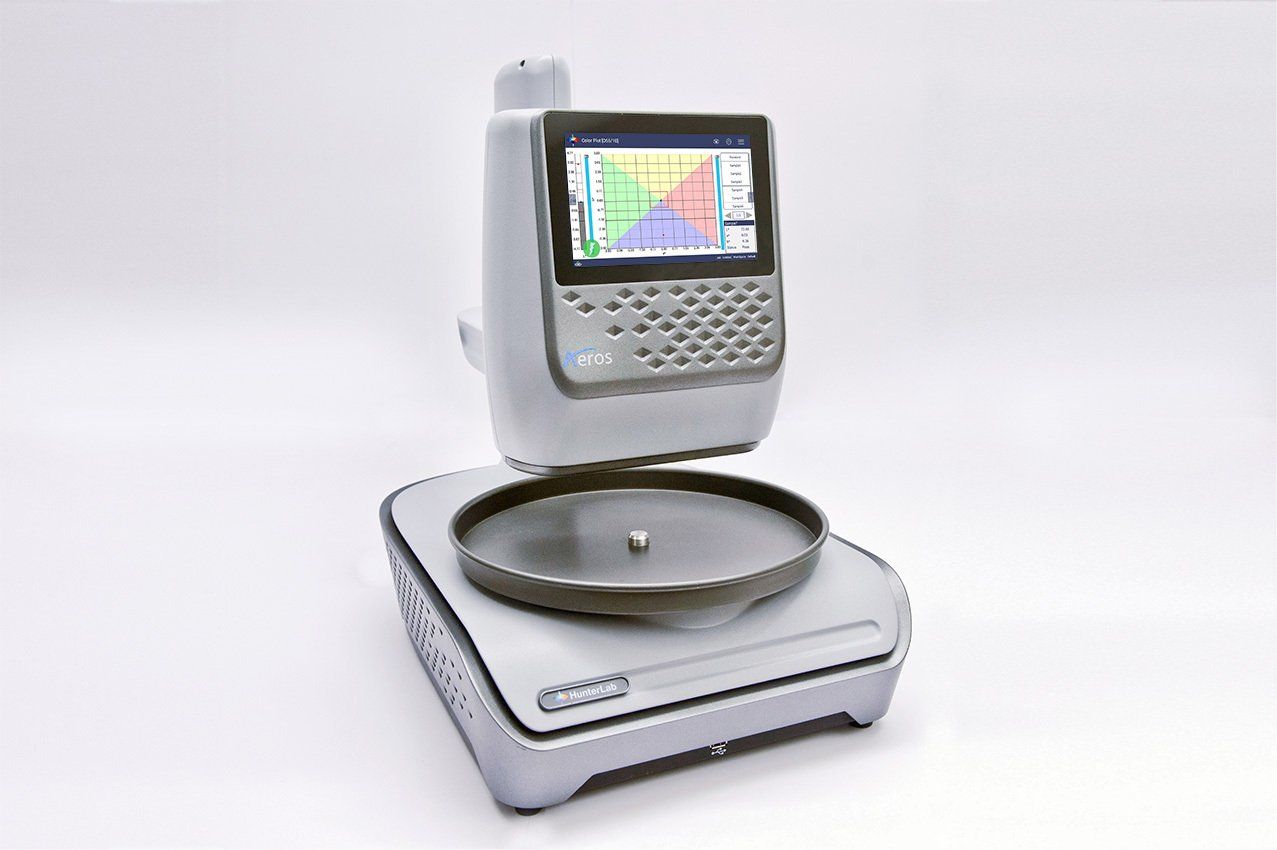
Aeros
Direct and non-contact measurement of irregular samples. For granules, pellets, powder or snack food.

ColorFlex L2 (45°/0°)
Compact colorimetry station with integrated QC software for many applications.

Agera L2 (0°/45°)
Color measurement (upward or forward-facing measuring opening) directly or in cuvettes, UV control and 60° gloss measurement.

SpectraTrend HT
Online (inline) spectrophotometer for quality control during production.
Contact us today to find out more about our devices and how you can best determine the color of your product in particular. The HunterLab team looks forward to hearing from you!